

A restaurant can look exceptional and still be uncomfortable.
The lighting may be right. The food may be excellent. The furniture may be beautiful. But if guests have to lean across the table and raise their voices to have a conversation, the room can become tiring very quickly.
That is why restaurant sound design and acoustics should be considered part of the guest experience from the beginning, not treated as a problem to solve after opening.
At Design Development Company, sound is considered alongside lighting, circulation, materials, food, service and atmosphere. These elements work together to determine how a restaurant feels.
The goal is not necessarily to make a restaurant quiet.
The goal is to make it sound right for the concept.
Why Are Restaurant Acoustics So Important?
Restaurant acoustics affect how easily guests communicate, how energetic a room feels and how comfortable people are spending time in the space.
Every restaurant contains multiple sound sources:
- Guest conversations
- Background music
- Glassware and dishes
- Chairs moving
- Kitchen activity
- Bars and beverage equipment
- HVAC and mechanical systems
- Employees communicating
- Doors and exterior noise
None of these sounds exists alone.
They combine into the restaurant’s overall sound environment.
When that environment works, guests may describe the restaurant as lively, intimate, energetic or comfortable.
When it does not, they usually describe it with one simple word: loud.
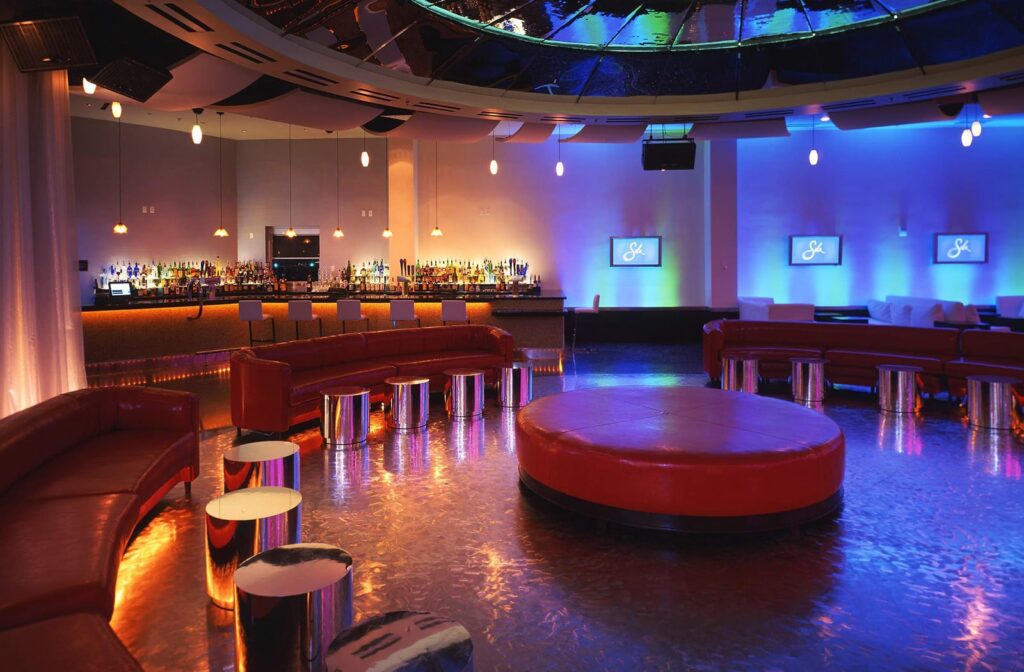
Not Every Restaurant Should Sound the Same
Good acoustic design is not about making every restaurant quiet.
A high-energy bar should feel different from a chef-driven tasting room.
A family entertainment center may intentionally have more activity and sound than an intimate fine-dining restaurant.
A busy neighborhood restaurant may benefit from enough background energy that guests feel part of a social environment.
This is why acoustics should begin with the concept.
Ask:
- Who is the primary guest?
- Are people coming for conversation, entertainment or both?
- How long are they expected to stay?
- How important is the bar?
- Will music be a significant part of the experience?
- How dense is the seating?
Design Development Company’s guide to developing the ideal restaurant design concept explains why the guest and intended experience should be defined before individual design decisions take over.
Hard Surfaces Can Create Hard Acoustic Problems
Many materials popular in restaurant interiors are acoustically reflective.
Concrete, glass, stone, tile, metal and hard ceilings can create visually strong environments, but they also reflect sound back into the room.
Fill that space with guests, music, plates and bar activity and the sound can build quickly.
This does not mean restaurants need to eliminate hard materials.
It means those materials need to be balanced.
Acoustical strategies may include:
- Absorptive ceiling treatments
- Acoustical wall panels
- Upholstered seating
- Soft furnishings where appropriate
- Architectural elements that break up large reflective surfaces
- Strategic separation between louder and quieter areas
The best solutions should feel like part of the interior design rather than obvious corrections added later.
Table Spacing Affects Sound Too
Seating density is usually discussed in terms of capacity, comfort and circulation.
It also affects acoustics.
When tables are tightly packed, guests hear more neighboring conversations. As the room gets louder, people may naturally speak louder themselves.
That can create a cycle where the entire dining room becomes increasingly difficult to talk in.
More seats may increase theoretical capacity, but capacity should always be considered alongside the quality of the experience.
A few additional tables are not necessarily valuable if guests feel crowded, servers struggle to move and conversation becomes uncomfortable.
Music Should Support the Room, Not Fight It
Background music can help establish energy, personality and pace.
But music is only one part of the sound environment.
If the dining room is already loud, simply increasing the music volume can make conversation even more difficult.
The music should support the concept while leaving room for the other sounds that naturally occur in the restaurant.
Consider:
- Volume
- Speaker placement
- Coverage throughout the room
- Style of music
- Time of day
- Whether some areas should feel different from others
A restaurant may want more energy during late-night service than during lunch. Like lighting, sound can change as the restaurant changes throughout the day.
The Kitchen Can Become Part of the Dining Room Soundscape
Open kitchens create energy and give guests a connection to food preparation.
They also introduce kitchen sound directly into the dining environment.
Cooking equipment, exhaust systems, dishwashing, employee communication, plates and metal surfaces can all contribute.
The same is true when service stations, dish returns or beverage areas are positioned too close to guest seating.
These are not reasons to hide the kitchen.
They are reasons to plan the relationship between front and back of house carefully.
Design Development Company’s commercial kitchen design approach considers food production, equipment, employee circulation and the surrounding dining environment together.
Mechanical Noise Is Easy to Ignore on a Drawing
HVAC systems, exhaust fans, refrigeration and other building equipment do not appear particularly dramatic on restaurant renderings.
Guests still hear them.
A constant mechanical hum near a quiet dining area can change the character of the space.
Air moving too aggressively from a diffuser can also create an unpleasant combination of noise and physical discomfort.
That is why restaurant acoustic planning requires coordination with the larger building design.
Sound is influenced not only by finishes and speakers but by mechanical systems and equipment that may be operating throughout the day.
Acoustics Affect Employees Too
Restaurant sound design should not focus exclusively on customers.
Employees spend far more time inside the restaurant than most guests do.
A noisy environment can make communication between servers, bartenders, hosts and kitchen employees more difficult.
Repeated misunderstandings can affect:
- Orders
- Service speed
- Employee communication
- Guest interaction
Years of firsthand restaurant operating experience have influenced Design Development Company’s approach to restaurant design. The team considers both what the guest experiences and what employees need to make the restaurant work.
Read more about that operating background on the About Design Development Company page.
Acoustic Design Should Happen Early
Trying to correct a noisy restaurant after opening can be difficult.
By then, ceilings are finished, lighting is installed, furniture is purchased and the visual design is complete.
Acoustical treatments may still be possible, but the options become more limited.
It is better to consider sound while evaluating:
- Ceiling design
- Wall materials
- Flooring
- Furniture
- Table spacing
- Kitchen openings
- Bar placement
- Speaker locations
- Mechanical systems
This allows acoustic solutions to become part of the design rather than something attached to it later.
Common Restaurant Acoustic Mistakes
Assuming “Loud” Automatically Means Energetic
Energy can support a social concept. Noise that makes normal conversation difficult is something else.
Using Reflective Materials Everywhere
Glass, tile, concrete and metal may fit the visual concept, but the room needs enough acoustic balance to control reflected sound.
Ignoring the Bar
Bars generate conversation, glassware, equipment and music. Their relationship to dining areas should be considered carefully.
Waiting Until After Opening
Acoustic problems are easier to address while ceilings, materials, seating and mechanical systems are still being designed.
Designing Sound Separately From the Concept
The appropriate sound environment depends on the guest and the experience. There is no universal acoustic formula for every restaurant.
Why Design Development Company?
Design Development Company has specialized in restaurant and hospitality environments since 1983.
The company’s approach brings several parts of the guest experience into the same design process, including:
- Concept development
- Interior and exterior restaurant design
- Space planning
- Commercial kitchen design
- Lighting design
- Sound, video and special effects
- Graphics and identity consultation
- Specifications and implementation
This matters because restaurant acoustics are connected to the architecture, materials, seating, kitchen, mechanical systems and overall concept.
Explore the Design Development Company portfolio or see what to look for when choosing a restaurant design firm.
Restaurant Acoustics FAQs
How can restaurants reduce noise?
Restaurant noise can be managed through a combination of absorptive materials, ceiling and wall treatments, furniture, appropriate table spacing, thoughtful speaker placement and separation of louder operational areas from quieter dining spaces.
Should a restaurant be quiet?
Not necessarily. The appropriate sound level depends on the concept. A lively bar, family restaurant and intimate dining room should not all have the same acoustic environment.
When should acoustics be considered in restaurant design?
Acoustics should be considered early, while the layout, ceiling, materials, furniture, mechanical systems and kitchen relationship are still flexible.
Does an open kitchen make a restaurant louder?
It can introduce additional cooking, equipment, dish and employee sounds into the dining room. An open kitchen can still work well when those sound sources are considered during planning.
Guests May Not Notice Good Acoustics. They Notice Bad Acoustics.
Most guests will never compliment a restaurant’s acoustic absorption or sound distribution.
They will notice whether they can comfortably talk to the person sitting across from them.
That is what makes sound one of the most underestimated parts of restaurant design.
The goal is not silence.
It is creating the right balance between energy, conversation, music and activity for the experience the restaurant is trying to deliver.
A restaurant should not only look like the concept. It should sound like it too.
Planning a Restaurant or Hospitality Project?
Design Development Company works with independent restaurants, multi-unit operators, hospitality groups and commercial developers on complete restaurant environments, including concept development, interiors, kitchens, lighting, sound and operational planning.
Discuss Your Restaurant Design Project With Design Development Company